
Fasting With Understanding
Beyond Restriction, Into Revelation
What Is Fasting Really?
If someone asked you to define fasting, what would you say?
For many of us, the first answer that comes to mind is simple: not eating. I wrote about fasting at the beginning of the year, from the POV of alignment and stretching yourself, but I have some more to share
Perhaps you think of giving up a favourite food for Lent, skipping meals during a church fast, or following a Daniel Fast with your small group. In recent years, conversations around intermittent fasting have also become increasingly popular, making the word fasting just as likely to appear in a wellness podcast as it is in a Sunday sermon.
Yet despite how familiar the word has become, I wonder if we've quietly reduced fasting to what we remove, rather than what we make room for.
Biblical fasting has never been about simply eating less. It has always been about seeking God more.
Food may be the thing we lay down, but intimacy with God is what we pursue.
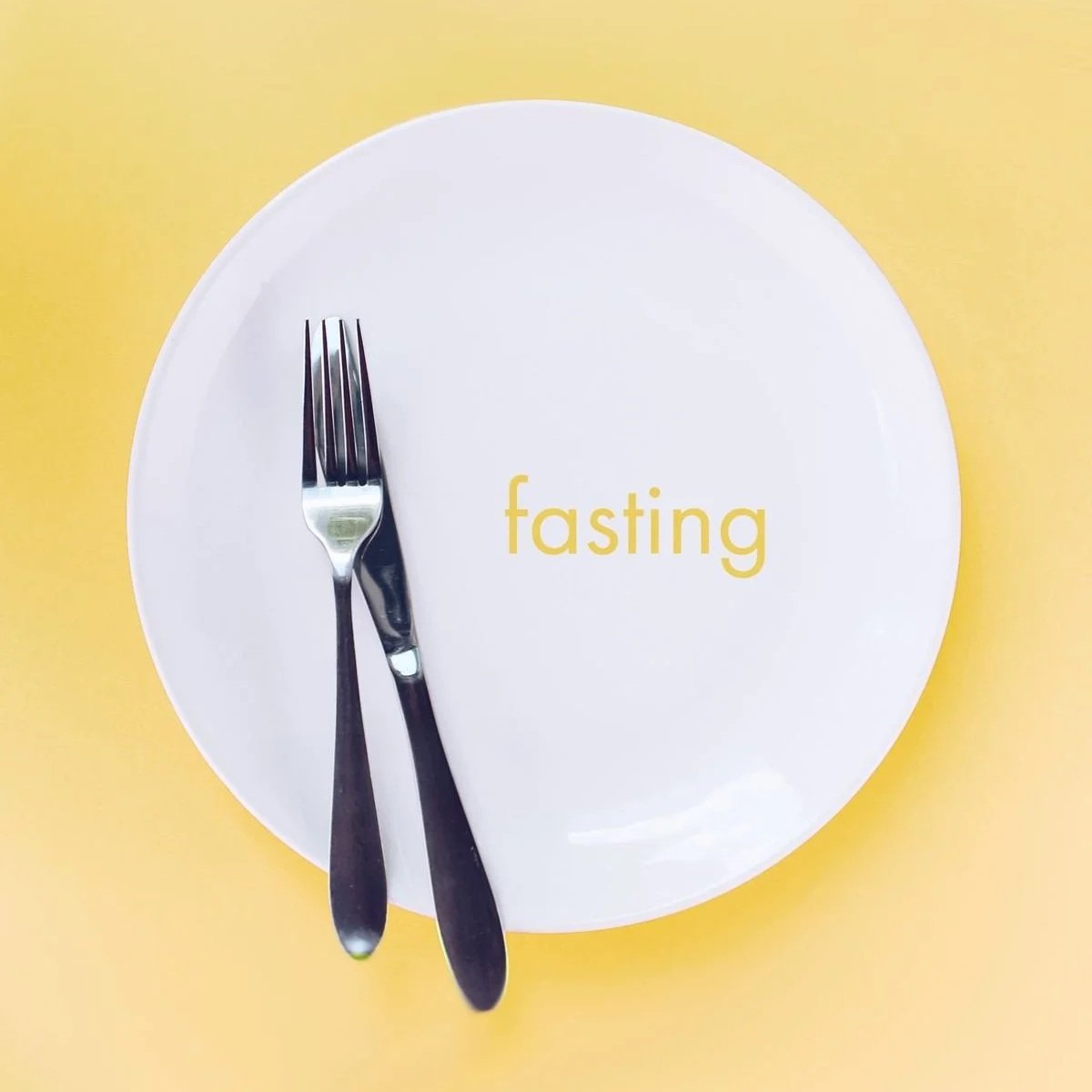
More Than an Empty Plate
Throughout Scripture, fasting is consistently connected to prayer, worship, repentance, dependence, and preparation. It was never intended to be a spiritual performance or a test of human willpower. Instead, fasting became a physical expression of a heart that longed for God above every other desire.
This is why Jesus assumed His followers would fast.
In the Gospel of Matthew 6:16–18, He didn't say if you fast, but when you fast. His concern wasn't whether His disciples would practise fasting, but how they would approach it. He warned against making it a public display for approval, reminding His listeners that the Father sees what is done in secret.
Fasting was never meant to impress people.
It was always meant to draw us nearer to God.
Fasting Is Not Spiritual Starvation
Sometimes we can unintentionally approach fasting as though our hunger earns God's attention.
It doesn't.
We don't fast because God is distant, unwilling to listen, or waiting to be persuaded by our sacrifice. We fast because our hearts need space to become more aware of His presence.
The temporary discomfort of hunger reminds us of a deeper truth: every human being has spiritual needs that food alone cannot satisfy.
As Jesus demonstrated during His forty days in the wilderness (Gospel of Luke 4:1–2), physical hunger became an opportunity to remain anchored in the Father's Word rather than immediate gratification.
Fasting isn't about proving how strong we are.
It's about remembering how dependent we are.
Fasting Is Not a Christian Diet
In a culture that often celebrates restriction, discipline, and self-improvement, it's understandable that fasting can become confused with dieting.
But the two are fundamentally different.
A diet asks,
"How can I change my body?"
Biblical fasting asks,
"How can God transform my heart?"
A diet centres appearance, performance, or health goals.
Biblical fasting centres communion with God.
While there may be physical effects that accompany fasting, they are not its purpose. If our primary motivation is weight loss, detoxification, or self-discipline alone, we may be practising restraint—but not necessarily biblical fasting.
The absence of food does not automatically create the presence of God.
Intentional surrender does.
Abstinence or Consecration?
This distinction has challenged me deeply.
It is entirely possible to abstain from something without becoming more devoted to God.
Someone can skip meals yet spend the extra time scrolling social media.
Someone can give up coffee but never open their Bible.
Someone can complete a twenty-one-day fast and finish spiritually unchanged.
Abstinence simply means saying no to something.
Consecration means saying yes to Someone.
The purpose of fasting isn't found in what leaves our plate.
It's found in what fills the space we've created.
What Should Increase During a Fast?
If fasting means consuming less, then something else should increase.
Not because we're following a checklist, but because we're intentionally making room for God.
Perhaps the time you would normally spend preparing or eating a meal becomes time spent in Scripture.
Perhaps the hunger pangs become reminders to pray rather than complaints to endure.
Perhaps the quiet moments become opportunities to worship, reflect, journal, or simply sit in God's presence without rushing to fill the silence.
Fasting is not about creating a spiritual to-do list.
It is about creating intentional space.
As we quiet some of life's constant noise, we become more attentive to the gentle voice of the Holy Spirit.
Beyond Restriction, Into Revelation
I believe one of the greatest invitations of fasting is this:
Not simply to give something up.
But to discover what God desires to fill us with instead.
His wisdom.
His peace.
His conviction.
His comfort.
His presence.
When fasting becomes centred on relationship rather than routine, it shifts from feeling like deprivation to becoming an act of worship.
We stop measuring success by how hungry we were and begin asking a different question:
Did I become more attentive to God?
Because ultimately, fasting is not spiritual starvation.
It is intentional surrender that makes room for God.
Reflection
Before beginning your next fast, pause and ask yourself:
What am I hoping to gain by laying this down?
What space am I intentionally creating for God?
If food becomes less of my focus, what will become more of my focus?
Perhaps those questions matter just as much as the fast itself.
Next in the series: You're Eating Less… But What Are You Giving More Of? Together we'll explore how biblical fasting naturally overflows into generosity, justice, and caring for others—not just personal devotion.
OZ x
